
Year 2023 is being celebrated as international millets year! lets know about millets on this occasion.
Do you know what are millets? If you are health conscious and truly care about yourself and your family, you must include them in your regular diet.
Millets were part of people’s diets during the 1960s. But slowly the millets started disappearing from our plates and moreover referred only to rice and wheat and that too refined based cereals. Between 1962 and 2010,India’s per capita consumption of millet fell drastically from 32.9 to 4.2 kg, while that of wheat almost doubled from 27 to 52 kg. (www.indiaspend.com). This led to less diversity in our regular food. Have you ever heard of your grandparents suffering from lifestyle diseases like diabetes, obesity, and cardiovascular diseases? I think the answer will be an absolute No! because their food habits were healthier than our todays food habits.
Lets know how millets are important for health
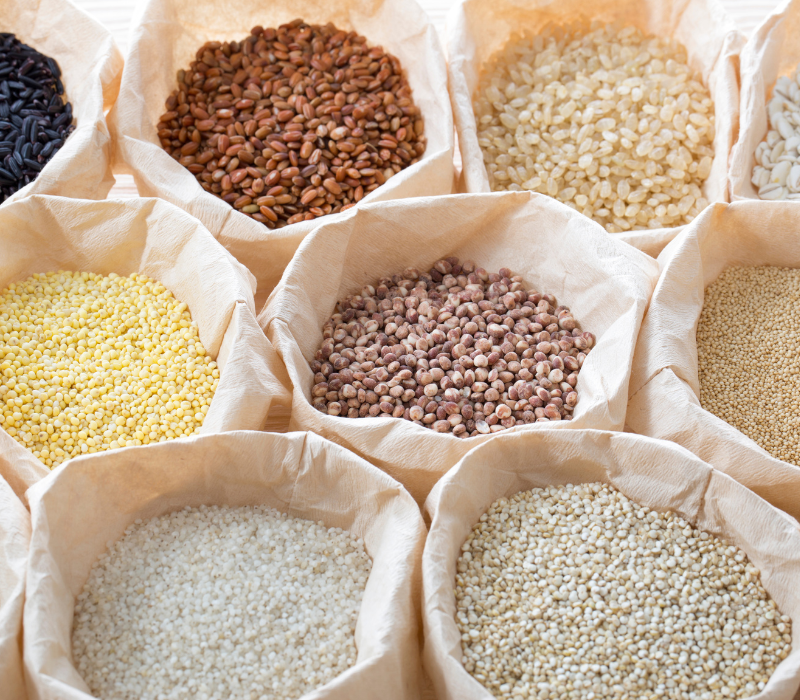
1. Health Benefits of Millet in Controlling Diabetes:
Millets play an important role in managing and controlling the blood sugar level in our bodies. Due to the high fiber content in millet, glucose is released into the blood in a very slow and steady manner. That means millet will not cause a sudden spike in blood sugar levels.
It was found that long-term millet consumption showed a reduction in HbA1c, which is lower than a rice-based diet. This meta-analysis confirmed that the millets evaluated have strong potential in dietary management and prevention of diabetes.
Due to the presence of high dietary fiber, it takes more time for digestion.
It keeps full & satiated for a longer time so a person does not get hunger pangs between meals.
Millets are composed of complex carbohydrates which digest slowly in the body.
Looking into the nutritional profile of millets, here are the 5 types of millets which you can choose for diabetes.
| Sr. No. | Millet | Carbohydrates | Fiber Content | C/F Ratio |
|---|---|---|---|---|
| 1 | Barnyard Millet | 65.6 | 13.6 | 4.82 |
| 2 | Browntop Millet | 61.37 | 12.5 | 4.90 |
| 3 | Little Millet | 65.6 | 7.6 | 8.63 |
| 4 | Foxtail Millet | 60.2 | 6.7 | 8.98 |
| 5 | Kodo Millet | 66.2 | 5.2 | 12.73 |
No doubt, millets are beneficial in managing and controlling diabetes. It can be included in the regular diet of non-diabetic people as a preventive & healthy approach.
2. Millets helps in controlling Obesity:
Obesity is increasing at a fast rate because of lifestyle and unhealthy eating and giving more preference to refined cereal-based diets, including more packaged food that are high in sugar, salt, and fats, and taking a more high-calorie diet with low nutrients. It is reported that obesity or being overweight is the major problem faced by city dwellers as compared to rural people.
The specific contents in the millet triggering weight loss in the body are dietary fiber, calorie content, policosanols, and tryptophan.
Due to high dietary fiber, carbohydrate absorption is slowed and glucose tolerance is reduced.
Dietary fiber helps in water absorption.
It acts as a detoxifying agent and helps in binding of the toxins.
Food transit time in the intestine is increased due to dietary fiber.
3. Millet are helpful in Celiac Diseases:
Celiac disease is a digestive disorder that damages the small intestine, triggered by eating food containing gluten - a protein found in wheat, rice, and many more grains. Gluten makes the dough elastic.
When someone with celiac disease eats gluten food, their body overreacts to the protein and damages the villi of the small intestine.
Celiac disease is found in 1 out of 100 people worldwide. In India it is more common in north India & less common in south India. So, millets are becoming a part of the diet of celiac patients.
4. Millet helps in detoxification of the body
Millets contain phenols and antioxidants and it helps to clean up toxins from the body.
5. Helps to protect against heart diseases
Millets contain essential fats, just the right amount to give our body natural fat. This helps prevent fat from depositing over muscles and avoids high cholesterol, heart strokes, and heart-related diseases.
6. Millets help in preventing cancer
Millets are effective in the prevention of cancer initiation and progression. Millets contain fibers and phytonutrients, the combination of which is believed to reduce the risk of developing colon cancer.
7. Millets help to slow down the aging process in the body
Everyone likes to look and remain young always. Millets are a good source of antioxidants. The high amount of antioxidants present in millet fights the free radicals present in the body which slows down the aging process.
8. Improve skin elasticity
Millets are rich in amino acids called L-Lysine and P-Proline. Millets help to create collagen in the body, a substance that gives structure to the skin and tissue. Thus eating millet fortifies the collagen level to improve skin elasticity and makes it less prone to wrinkles.
9. Millets help in preventing anaemia
In India, Anaemia is prevalent and it is mostly found in children, pregnant and non-pregnant women. Millets are the best source of iron. Iron is beneficial in preventing anaemia. Pearl Millet (Bajra) contains the highest iron content (11 mg per 100gm grains). Consumption of Pearl Millet prevents iron deficiency in the body.
10. Millets help in reducing hypertension
Millets help in preventing the oxidation of low-density lipoprotein thus reducing hypertension.
11. Millets act as prebiotics and improve gut health
We know that millets are rich in dietary fiber, both soluble and insoluble. The insoluble dietary fiber in millets is known as a prebiotic that supports bacteria in our digestive system.